

Computer Information Systems vs Computer Science: What’s the Difference? sets the stage for this enthralling narrative, offering readers a glimpse into a story that is rich in detail with casual formal language style and brimming with originality from the outset.
As we delve deeper into the distinct realms of Computer Information Systems and Computer Science, we uncover a world of possibilities and opportunities that await those interested in the intersection of technology and innovation.
Overview of Computer Information Systems and Computer Science
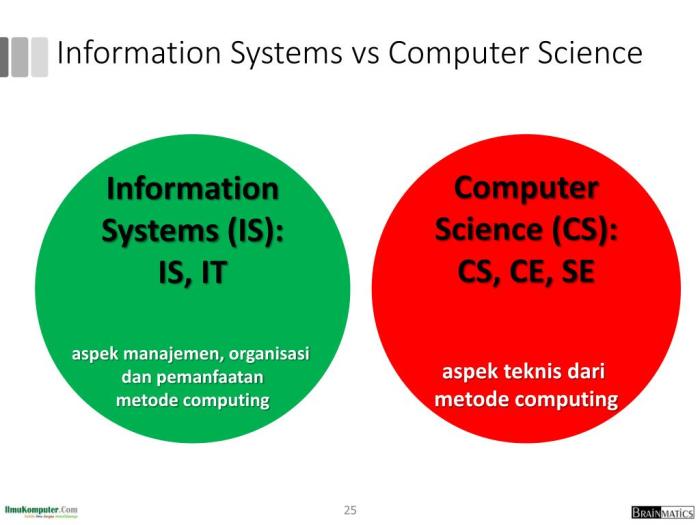
Computer Information Systems (CIS) is a field that focuses on the application of technology in business settings. It involves the study of how technology can be used to solve organizational problems and improve efficiency in various business processes.On the other hand, Computer Science is a broader discipline that deals with the theoretical foundations of computation and the practical techniques for their application.
It encompasses the study of algorithms, programming languages, software design, and hardware systems.
Key Differences
- CIS is more focused on the practical application of technology in business environments, while Computer Science is more theoretical and research-oriented.
- Computer Science deals with the development of software, algorithms, and systems, whereas CIS focuses on the use of technology to solve business problems and improve operations.
- Computer Science has a stronger emphasis on mathematics and theory compared to CIS, which places more emphasis on business processes and organizational management.
- While Computer Science graduates often pursue careers in software development, data analysis, and research, CIS graduates typically work in roles such as IT consultants, business analysts, and systems administrators.
Curriculum and Courses
In Computer Information Systems (CIS) programs, students typically take courses that focus on the practical application of technology in business settings. These courses often include database management, systems analysis and design, project management, programming, and networking.
Typical Courses in Computer Information Systems Programs:
- Database Management: Covers the design, implementation, and maintenance of databases used in organizations.
- Systems Analysis and Design: Teaches students how to analyze business processes and design information systems to meet organizational needs.
- Project Management: Focuses on managing IT projects, including planning, budgeting, and implementation.
- Programming: Introduces students to programming languages commonly used in business applications.
- Networking: Covers the basics of computer networks, including protocols, security, and maintenance.
In contrast, Computer Science programs have a more theoretical and mathematical approach to computing. Students in Computer Science programs typically take courses in algorithms, data structures, software development, computer architecture, and artificial intelligence.
Typical Courses in Computer Science Programs:
- Algorithms: Studies the design and analysis of algorithms for problem-solving.
- Data Structures: Focuses on organizing and storing data efficiently in computer systems.
- Software Development: Teaches students how to develop software applications using different programming languages.
- Computer Architecture: Explores the design and organization of computer systems and components.
- Artificial Intelligence: Introduces students to the concepts and techniques used in developing intelligent systems.
The curriculum in Computer Information Systems prepares students for careers in IT management, business analysis, database administration, and systems analysis. On the other hand, the curriculum in Computer Science prepares students for careers in software development, cybersecurity, research, and academia.
Both fields provide students with the necessary skills to succeed in the rapidly evolving technology industry, but they differ in their focus and approach to computing.
Career Paths and Job Opportunities
When it comes to career paths and job opportunities for Computer Information Systems (CIS) and Computer Science (CS) graduates, there are distinct avenues that each field offers. Let’s delve into the different opportunities available for professionals in these two disciplines.
Career Paths for Computer Information Systems Graduates
- Systems Analyst: CIS graduates often pursue careers as systems analysts, responsible for analyzing computer systems and designing solutions to help organizations operate more efficiently.
- Database Administrator: Another common career path for CIS graduates is becoming a database administrator, overseeing the storage, organization, and security of an organization’s data.
- IT Manager: CIS professionals can also advance to roles as IT managers, overseeing the technology infrastructure and leading teams to ensure smooth operations.
Career Paths for Computer Science Graduates
- Software Developer: CS graduates often work as software developers, designing and creating software applications and systems for various industries.
- Data Scientist: Another popular career path for CS professionals is becoming a data scientist, analyzing and interpreting complex data to help organizations make informed decisions.
- Cybersecurity Analyst: CS graduates can also specialize in cybersecurity, protecting organizations from cyber threats and ensuring data security.
Job Opportunities and Industries
Professionals in Computer Information Systems can find job opportunities in a variety of industries, including healthcare, finance, government, and education. They can work in roles such as IT consultants, business analysts, and project managers.
On the other hand, Computer Science graduates can explore job opportunities in tech companies, research institutions, startups, and more. They can work as software engineers, data analysts, machine learning engineers, and more.
Skill Sets and Technical Knowledge
When it comes to Computer Information Systems (CIS) and Computer Science (CS), professionals in these fields require specific skill sets and technical knowledge to excel in their roles. Let’s explore the key areas that differentiate and overlap between the two disciplines.
Skill Sets for Computer Information Systems Professionals
- Strong problem-solving skills
- Excellent communication skills
- Understanding of business processes
- Ability to analyze and interpret data
- Project management skills
Technical Knowledge Areas for Computer Science Professionals
- Proficiency in programming languages such as Java, C++, Python
- Knowledge of algorithms and data structures
- Understanding of computer architecture and systems
- Expertise in software development and testing
- Cybersecurity and network knowledge
Differences and Overlaps
While Computer Information Systems professionals focus on the intersection of technology and business, requiring a mix of technical and soft skills, Computer Science professionals delve deeper into the core technical aspects of computing. However, there are areas of overlap where both fields require analytical thinking, problem-solving abilities, and a solid foundation in technology.
Research and Innovation
Research plays a crucial role in both Computer Information Systems and Computer Science, driving advancements and breakthroughs in technology. Let’s explore how research and innovation are fostered in each field to contribute to technological progress.
Role of Research in Computer Information Systems
Research in Computer Information Systems focuses on studying how information is utilized within organizations, analyzing systems and processes to improve efficiency and effectiveness. Researchers in this field investigate topics such as database management, network security, and information technology governance. By conducting research, professionals in Computer Information Systems can develop new tools, techniques, and methodologies to address the evolving needs of businesses and organizations.
Role of Research in Computer Science
In Computer Science, research is essential for exploring new algorithms, programming languages, and computing methodologies. Researchers in Computer Science work on a wide range of topics, including artificial intelligence, machine learning, and cybersecurity. Through research, computer scientists push the boundaries of technology, creating innovative solutions to complex problems and driving advancements in various industries.
Innovation and Advancements
In both Computer Information Systems and Computer Science, innovation is fostered through collaboration, experimentation, and continuous learning. By fostering a culture of innovation, professionals in these fields can develop cutting-edge technologies, software applications, and systems that revolutionize how we interact with technology.
The constant drive for innovation leads to advancements in areas such as cloud computing, data analytics, and cybersecurity, shaping the future of technology and driving progress in society.
Importance in the Industry
Computer Information Systems and Computer Science play crucial roles in today’s business world and technological advancements, respectively. Let’s delve into their significance in various industries and society as a whole.
Computer Information Systems in Business
Computer Information Systems are essential for businesses to effectively manage their data, streamline operations, and make informed decisions. These systems enable organizations to store, retrieve, and analyze data efficiently, leading to improved productivity and decision-making processes.
Computer Science Driving Technological Advancements
Computer Science is at the forefront of driving technological advancements across industries. From artificial intelligence to cybersecurity to software development, computer scientists are instrumental in innovating and creating cutting-edge technologies that shape the future.
Impact on Industries and Society
- Computer Information Systems impact industries by enhancing operational efficiency, enabling better decision-making, and facilitating communication within organizations.
- Computer Science drives innovation in various sectors such as healthcare, finance, and transportation, leading to improved services, products, and processes that benefit society as a whole.
- Both fields have a profound impact on society by improving access to information, creating new job opportunities, and fostering technological advancements that shape the way we live and work.
Last Word
In conclusion, the comparison between Computer Information Systems and Computer Science sheds light on the diverse paths individuals can take within the realm of technology. Whether one leans towards the practical applications of information systems or the theoretical underpinnings of computer science, both fields offer unique avenues for growth and development in the digital age.
Clarifying Questions
What are the key differences between Computer Information Systems and Computer Science?
Computer Information Systems focuses on the application of technology in business settings, while Computer Science delves into the theoretical foundations of computing.
What career paths can Computer Information Systems graduates pursue compared to Computer Science graduates?
Computer Information Systems graduates often find roles in IT management, systems analysis, and consulting, whereas Computer Science graduates may opt for software development, artificial intelligence, or research positions.
How do the skill sets required in Computer Information Systems differ from those in Computer Science?
Computer Information Systems professionals need strong business acumen and technical expertise in information systems management, while Computer Science professionals focus on programming, algorithms, and software development.
What role does research play in Computer Information Systems and Computer Science?
Research in Computer Information Systems often focuses on improving business processes and information management systems, while research in Computer Science drives advancements in algorithm development, machine learning, and computational theory.

