

Exploring the pivotal role of Health Information Technology in shaping the landscape of digital healthcare, this discussion delves into the transformative power it holds. From enhancing patient care to revolutionizing healthcare systems, the impact of this technology is profound and far-reaching.
Importance of Health Information Technology in Digital Healthcare
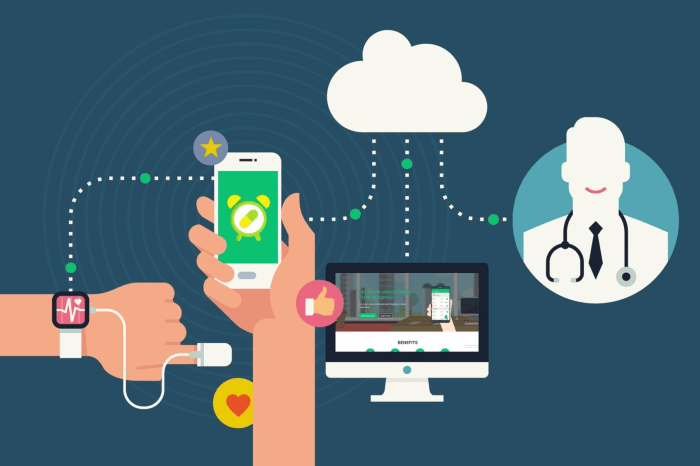
Health Information Technology plays a crucial role in revolutionizing digital healthcare by streamlining processes, improving efficiency, and enhancing patient care.
Enhanced Patient Care and Outcomes
Health Information Technology enables healthcare providers to access real-time patient data, leading to more informed decision-making and personalized treatment plans. This technology facilitates communication between different healthcare teams, resulting in coordinated care and better outcomes for patients.
Significance of Electronic Health Records
Electronic Health Records (EHRs) have become an integral part of modern healthcare systems, allowing healthcare providers to store, retrieve, and share patient information securely. EHRs enhance patient safety by reducing medical errors, improving diagnostic accuracy, and ensuring continuity of care across different healthcare settings.
Advantages of Implementing Health Information Technology
Implementing Health Information Technology (HIT) in healthcare settings offers numerous benefits for healthcare providers, patients, and the overall healthcare system. One of the primary advantages of HIT is the transition from traditional paper-based systems to digital systems, which significantly improves efficiency and accuracy in managing patient information.
Efficiency and Accuracy
- Electronic health records (EHRs) enable healthcare providers to access patient information quickly and securely, leading to faster and more informed decision-making.
- HIT reduces the risk of errors associated with manual data entry and paper-based record-keeping, improving the overall quality of care provided to patients.
- Automation of routine tasks such as appointment scheduling, billing, and prescription refills streamlines administrative processes, allowing healthcare professionals to focus more on patient care.
Enhanced Communication
- HIT facilitates seamless communication among healthcare professionals by providing a centralized platform for sharing patient information, test results, and treatment plans.
- Telemedicine platforms and secure messaging systems enable healthcare providers to collaborate remotely, leading to more coordinated and efficient care delivery.
- Real-time access to patient data allows healthcare teams to make timely decisions, improve care coordination, and ensure continuity of care across different providers and settings.
Challenges and Solutions in Adopting Health Information Technology
Transitioning to digital systems in healthcare organizations comes with its own set of challenges that need to be addressed effectively. These challenges range from security concerns to staff training issues.
Security and Privacy Concerns
One of the primary challenges in adopting Health Information Technology is ensuring the security and privacy of patient data. Healthcare organizations need to implement robust security measures to prevent unauthorized access and data breaches. Solutions to address these concerns include:
- Implementing encryption techniques to secure data transmission
- Regularly updating security protocols to stay ahead of potential threats
- Training staff on best practices for data security and privacy
Training Healthcare Staff
Another challenge is ensuring that healthcare staff are effectively trained to use Health Information Technology tools. Without proper training, the full potential of these systems cannot be realized. Strategies to address this challenge include:
- Providing comprehensive training programs for all staff members
- Offering continuous education and support for ongoing learning
- Engaging staff in the implementation process to increase buy-in and understanding
Future Trends in Health Information Technology

The future of digital healthcare is constantly evolving, driven by advancements in technology and the need for more efficient and effective healthcare delivery. Health Information Technology plays a crucial role in shaping this future, with several emerging trends that are set to revolutionize the healthcare industry.
Artificial Intelligence and Machine Learning
Artificial intelligence (AI) and machine learning are poised to transform Health Information Technology by enabling more personalized and precise healthcare services. These technologies can analyze vast amounts of data to identify patterns, predict outcomes, and provide insights that can inform clinical decision-making.
AI-powered tools can improve diagnostics, treatment planning, and patient care, ultimately leading to better health outcomes.
Telemedicine and Remote Monitoring
Telemedicine and remote monitoring technologies have the potential to revolutionize healthcare delivery by enabling virtual consultations, remote patient monitoring, and telehealth services. These technologies allow patients to access healthcare services from the comfort of their homes, reducing the need for in-person visits and improving access to care.
Telemedicine and remote monitoring can also enhance care coordination, chronic disease management, and preventive healthcare efforts.
Final Summary
In conclusion, the future of digital healthcare is intricately linked with the advancements in Health Information Technology. As we navigate through the complexities of modern healthcare, embracing these innovations will be crucial for improving patient outcomes and streamlining healthcare delivery.
Questions Often Asked
How does Health Information Technology improve patient care?
Health Information Technology enhances patient care by streamlining processes, improving accuracy, and facilitating communication among healthcare providers.
What are some common challenges in adopting Health Information Technology?
Common challenges include resistance to change, initial costs of implementation, and concerns regarding data security and privacy.
How will artificial intelligence impact Health Information Technology in the future?
Artificial intelligence is poised to revolutionize Health Information Technology by enabling predictive analytics, personalized medicine, and more efficient healthcare delivery.

