

Exploring the realm of Health Information Technology and its significance, this introduction sets the stage for a captivating journey into the world of modern healthcare systems.
In the following paragraphs, we will delve into the key components, benefits, challenges, and future trends of Health Information Technology, shedding light on its crucial role in shaping the healthcare landscape.
Introduction to Health Information Technology
Health Information Technology (HIT) encompasses the use of technology to manage healthcare information, including electronic health records (EHR), telemedicine, medical imaging systems, and healthcare analytics.
Examples of HIT Applications in Healthcare Settings
- Electronic Health Records (EHR): Digitalized patient records that allow for easy access and sharing among healthcare providers.
- Telemedicine: Remote consultations and monitoring of patients using telecommunication technologies.
- Medical Imaging Systems: Tools like X-rays, MRIs, and CT scans that aid in diagnosis and treatment planning.
- Healthcare Analytics: Data analysis to improve patient outcomes, operational efficiency, and decision-making.
The Importance of HIT in Modern Healthcare Systems
Health Information Technology plays a crucial role in enhancing patient care, streamlining workflows, reducing medical errors, and improving overall healthcare quality and efficiency. By digitizing health information, healthcare providers can make more informed decisions, coordinate care effectively, and ultimately deliver better outcomes for patients.
Components of Health Information Technology
Health Information Technology (HIT) systems consist of various key components that play crucial roles in managing and analyzing healthcare data to improve patient outcomes and streamline processes. Some of the primary components of HIT systems include electronic health records (EHRs), telemedicine, data analytics, and interoperability.
Electronic Health Records (EHRs)
Electronic Health Records (EHRs) are digital versions of patients’ paper charts that contain their medical history, diagnoses, medications, treatment plans, immunization dates, allergies, radiology images, and laboratory test results. EHRs enable healthcare providers to access and share patient information securely, leading to more coordinated and efficient care.
Telemedicine
Telemedicine involves the use of technology to provide remote healthcare services, such as consultations, monitoring, and follow-ups, to patients. Through telemedicine, healthcare providers can reach patients in remote or underserved areas, enhance access to care, and reduce healthcare costs.
Data Analytics
Data analytics in HIT involves the use of advanced tools and techniques to analyze and interpret vast amounts of healthcare data. By leveraging data analytics, healthcare organizations can identify trends, patterns, and insights that help in decision-making, risk assessment, and quality improvement initiatives.
Interoperability
Interoperability refers to the ability of different HIT systems and software applications to communicate, exchange data, and use the information effectively. Achieving interoperability within HIT systems is crucial for seamless data sharing, care coordination, and improving healthcare outcomes for patients across various healthcare settings.
Benefits of Health Information Technology
Health Information Technology (HIT) offers numerous benefits that significantly improve patient care, safety, healthcare efficiency, cost-effectiveness, and communication among healthcare providers.
Improved Patient Care and Safety
- Electronic Health Records (EHRs) allow healthcare providers to access comprehensive patient information quickly, leading to better-informed decisions and more personalized care.
- Alert systems in HIT help prevent medication errors, allergies, and other potential risks by providing real-time warnings and reminders to healthcare professionals.
- Telehealth services enabled by HIT allow patients to receive timely care, especially in remote or underserved areas, improving access to healthcare services and reducing unnecessary hospital visits.
Impact on Healthcare Efficiency and Cost-Effectiveness
- Streamlined workflows and automated processes in HIT reduce administrative tasks, paperwork, and duplication of tests, saving time and resources for healthcare providers and organizations.
- Remote monitoring and telemedicine services help in managing chronic conditions, reducing hospital readmissions, and overall healthcare costs by promoting preventive care and early intervention.
- Data analytics and population health management tools in HIT enable healthcare organizations to identify trends, patterns, and areas for improvement, leading to better resource allocation and enhanced decision-making.
Enhanced Communication Among Healthcare Providers
- Interoperable systems in HIT facilitate seamless sharing of patient information among healthcare teams, promoting collaboration, care coordination, and continuity of care.
- Secure messaging platforms and teleconferencing tools improve communication between healthcare providers, allowing for quick consultations, referrals, and updates on patient progress.
- Telemedicine consultations and virtual health platforms enhance communication between patients and healthcare providers, enabling remote monitoring, follow-ups, and education on health management.
Challenges and Concerns in Health Information Technology
Health Information Technology (HIT) implementation comes with its own set of challenges and concerns that need to be addressed to ensure successful integration and utilization within healthcare systems. One of the main challenges is the complexity of implementing HIT systems, which can be daunting for healthcare providers and staff members.
Privacy and Security Issues
- One of the primary concerns with electronic health records (EHRs) is the potential privacy breaches and data security risks associated with storing sensitive patient information digitally.
- Unauthorized access to patient records, data breaches, and hacking incidents pose a significant threat to patient confidentiality and trust in the healthcare system.
- Ensuring compliance with privacy regulations such as HIPAA is crucial to safeguard patient data and maintain confidentiality.
Potential Risks of Relying Heavily on HIT Systems
- Overreliance on HIT systems without adequate backup or contingency plans can lead to disruptions in patient care and critical healthcare services in the event of system failures or technical issues.
- Data inaccuracies, system errors, and interoperability challenges between different HIT platforms can compromise the quality of patient care and decision-making processes.
- The lack of standardized practices and protocols for HIT implementation across healthcare organizations can result in inconsistent data management practices and hinder effective information exchange.
Future Trends in Health Information Technology
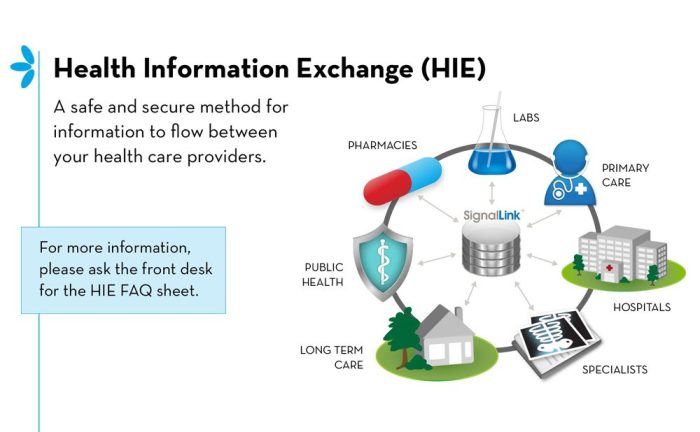
The field of Health Information Technology (HIT) is constantly evolving to meet the changing needs of the healthcare industry. Emerging technologies are playing a crucial role in shaping the future of HIT, with advancements like artificial intelligence (AI) and machine learning leading the way towards more efficient and effective healthcare delivery.
Role of Artificial Intelligence and Machine Learning
Artificial intelligence and machine learning are revolutionizing the way healthcare data is processed and analyzed. These technologies can quickly identify patterns and trends in large datasets, helping healthcare providers make more informed decisions and improve patient outcomes. AI-powered tools can also assist in diagnosing diseases, personalizing treatment plans, and predicting potential health risks.
Evolution of Health Information Technology
As healthcare needs continue to evolve, HIT is expected to adapt and expand to meet these challenges. The future of HIT may involve more interconnected systems that allow for seamless data sharing between different healthcare providers and organizations. Telemedicine and remote monitoring technologies are likely to become more prevalent, enabling patients to receive care from the comfort of their homes.
Additionally, the use of wearable devices and health trackers will provide a wealth of real-time data that can be used to monitor and improve patient health.
Enhanced Data Security and Privacy Measures
With the increasing digitization of healthcare data, ensuring the security and privacy of patient information is of utmost importance. Future trends in HIT will focus on implementing robust cybersecurity measures to protect sensitive data from cyber threats and unauthorized access.
Blockchain technology, for example, can provide a secure and transparent way to store and share healthcare data while maintaining patient privacy.
Final Conclusion
In conclusion, the discussion on Health Information Technology and its implications underscores the pivotal role it plays in revolutionizing patient care, healthcare efficiency, and the overall delivery of medical services. As technology continues to evolve, embracing HIT becomes increasingly vital in meeting the ever-changing needs of the healthcare sector.
Common Queries
What are some common challenges in implementing Health Information Technology?
Some common challenges include resistance to change from healthcare professionals, interoperability issues between different systems, and the initial high costs of implementation.
How does Health Information Technology improve patient care and safety?
HIT enhances patient care by providing quick access to medical records, reducing medical errors through standardized processes, and facilitating communication between healthcare providers.
What role does data analytics play in Health Information Technology?
Data analytics in HIT helps in identifying trends, improving decision-making processes, and predicting potential health outcomes based on historical data.

